 Chemical Cognition Lab

About
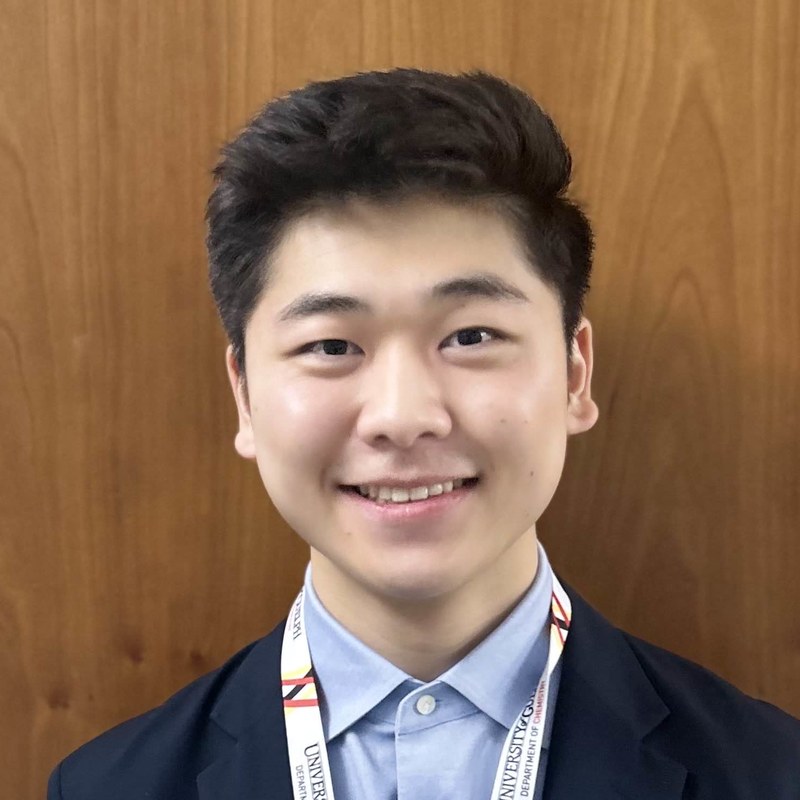
I am a Chemical Engineering MASc student at the University of Toronto and a graduate researcher in Prof. Benjamin Sanchez-Lengeling’s Chemical Cognition Lab at the Vector Institute.
My research is focused on applying methods in AI/ML towards problems in molecular and materials discovery! Right now I’m working on creating tools to augment the capabilities of experimental researchers through deep probabilistic models for molecules, guiding experiments and active learning workflows under uncertainty. I care about interpretability through incorporation of calibrated uncertainty quantification and post-hoc attribution methods, in order to justify and accelerate responsible AI for autonomous scientific discovery.
I spent two years as a synthetic and analytical chemist before pivoting to machine learning, applying scientific intuition towards my modelling and my teaching (despite the bitter lesson).
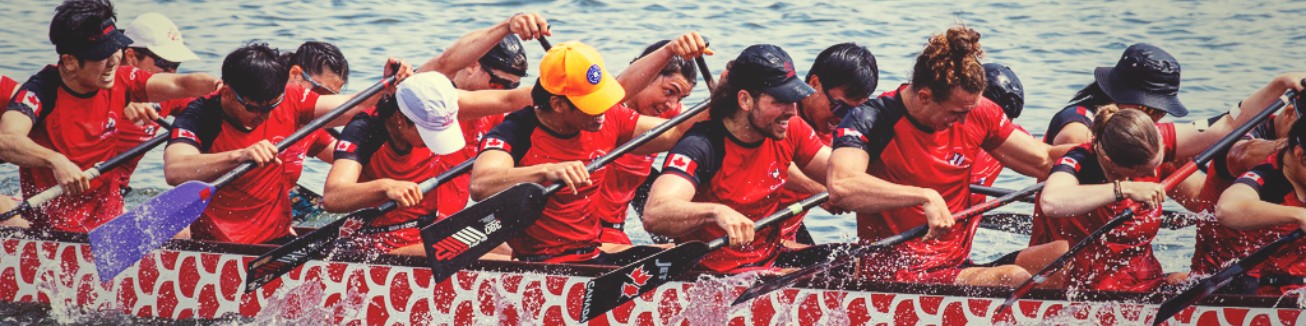
Outside the lab I raced for the Canadian National Dragon Boat Team through a grueling selection process, attaining 3× gold and 3× silver at the 2025 IDBF World Championships in Germany. I also raced with the Iron Dragons Paddling Club (1× gold, 2× silver, 3× bronze at the 2024 Club Crew World Championships in Italy). I was also President of the U of T Run Club from 2024 to 2025, leading the campus’ largest student organization: I made it official U of T Sport & Recreation programming and organized an ~80-runner charity race that raised $500+ for a pedestrian footbridge in Bolivia.
Education
-
MASc, Chemical Engineering (Machine Learning)
 University of Toronto
2025 – Summer 2027 (expected)
Thesis: deep probabilistic & generative models for uncertainty-aware experimental research guidance. NSERC CREATE Trainee, Acceleration Consortium (AI & automation for materials discovery). Coursework: AI for Applied Chemistry & Chemical Engineering (A+); Chemical Data Science & Engineering (A+); Fundamentals of Chemical Engineering (A−).
-
HBSc, Pharmaceutical Chemistry
University of Toronto · Focus in Practical Chemical Analysis
2021 – 2025
Dean’s List, all years. Two research theses, both graded A.
Research
-
Graduate Researcher, Chemical Cognition Lab Prof. Benjamin Sanchez-Lengeling · University of Toronto & Vector Institute 2025 – present
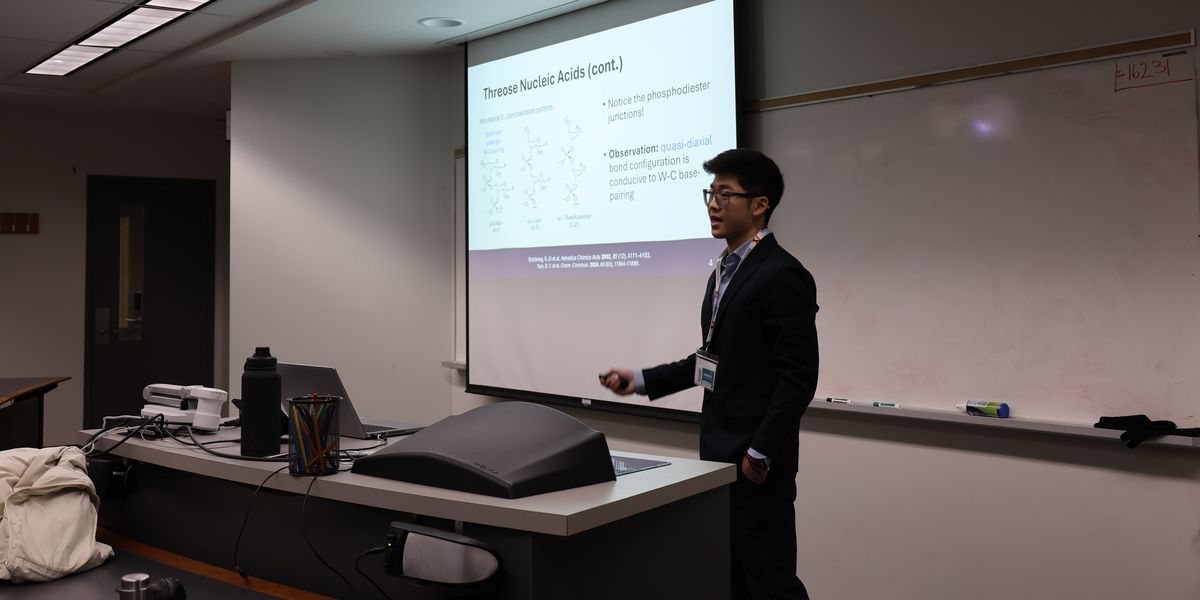
- LatentPockets. Generative models that learn protein pocket representations from protein–ligand data, helping experimental researchers with drug target selection in filling structural biology data gaps. Oral Talk, CSC 2026, Toronto.
- Deep kernel learning for polymers. Benchmarked graph neural networks with spectral-normalized Gaussian processes for low-data polymer property prediction across 6 datasets and 13 targets, fusing molecular graphs with process conditions. Attributed structure vs. process contributions via integrated gradients and GP-SHAP.
In collaboration with the Structural Genomics Consortium (SGC) and NC State University.
-
Researcher, Medicinal Chemistry Self-Driving Lab Acceleration Consortium May – Aug 2025
- Evaluated chemical representations and clustering of Enamine building blocks for use in Reaction-GFlowNets.
- Proposed and validated automatable synthetic experiments.
-
Research Assistant, Taylor Group Prof. Mark S. Taylor · University of Toronto 2024 – 2025
Independently developed a photoredox route to threose nucleosides: 47% yield over 5 steps, more than 20% above prior methods. Thesis grade: A.
- Photoredox dehomologation of ribonucleosides (5′-carbon excision) to bypass lengthy threose nucleoside triphosphate syntheses.
- Explored three excision routes: reductive dehydroxymethylation (NHP ether), decarboxylation (NHP ester), and decarbonylation (aldehyde).
-
Research Student, Peng Group Prof. Hui Peng · University of Toronto 2023 – 2024
Synthesized combinatorial organophosphate ester libraries for high-throughput structure–activity and toxicity screening, characterized by quantitative 31P-NMR and MS. Thesis grade: A.
- Libraries served as training data for environmental machine learning in CoSyER (see publications).
- Ran L-FABP1 binding assays by fluorescence displacement spectroscopy.
-
Research Assistant, Batey Group Prof. Robert A. Batey · University of Toronto May – Aug 2023
- Identified acylating electrophiles selective for primary over secondary amines via competition experiments, for multicomponent couplings.
- Measured selectivity ratios by quantitative 19F-NMR using ortho-fluorobenzoyl electrophiles.

Selected projects
-
LLM-Guided Autonomous Optimization Agent Open Scientific Intelligence Hackathon Oct 2026
- An autonomous agent that uses LLM reasoning to steer optimization campaigns for materials discovery. Manuscript in preparation.
-
Turbidity Forecasting & Anomaly Detection Course project · University of Toronto Jan – Apr 2026
- TCN forecasting and anomaly-detection benchmark on 10+ years of raw Ontario water treatment plant data, aimed at reducing excess upstream coagulant dosing.
- Traced its predictive ceiling to low target variance (0.0015 NTU²) against a ±0.02 NTU sensor noise floor.
No entries match that topic.
Publications & Conferences
- Jun 2026
-
May 2026
Oral
LatentPockets: Addressing Structural Biology Data Gaps by Learning over Protein Subpockets
-
Mar 2025
Oral
Photoredox-Enabled Dehomologation of Ribonucleosides Towards Threose Nucleosides
-
Apr 2024
Oral
Combinatorial Organophosphate Synthesis for High-Throughput Structure-Activity Relationship
-
Aug 2024
Poster
Application of Photocatalytic Dehydroxymethylation of Nucleosides Towards Nucleoside Triphosphate Synthesis
-
Mar 2024
Poster
Combinatorial Organophosphate Synthesis for High-Throughput Structure-Activity Relationship
-
Aug 2023
Poster
Chemoselective Acylations of Primary over Secondary Amines via Competition Experiments
No items of that type.
Awards & Scholarships
- Jan 2026 McLean Foundation Graduate Scholarship in Science and Technology$6,000
- Apr 2025 Acceleration Consortium Research Award in Accelerated Discovery$8,500
- Apr 2024 DuPont Canada Inc. Research Fellowship Award$7,500
-
Apr 2024
New Member of the Year Award
U of T Clubs & Leadership Development; selected from 10 nominees.
- Mar 2023 DuPont Canada Inc. Research Fellowship Award$4,500
Teaching
-
Machine Learning Teaching Assistant CrossTALK AI-for-drug-discovery program · Data Science Institute, University of Toronto Jun 2026
- Debugged student ML code in Python and clarified concepts one-on-one and in small groups.
- Advised on building and tuning drug-candidate prediction models.
Program: CrossTALK: Cross-Training in AI and Laboratory Knowledge for Drug Discovery
-
Teaching Assistant — CHMB41: Organic Chemistry I University of Toronto Jan – Apr 2026
- Ran and graded group problem-solving tutorials and online quizzes on organic chemistry fundamentals and mechanisms.
-
Teaching Assistant — APS110: Engineering Chemistry & Materials Science University of Toronto Sept – Dec 2025
- Prepared 4 hours of weekly review and problem-solving tutorials for 80 first-year engineering students.
- Led active-learning sessions, graded assignments and exams, and invigilated.